



Set Your Dip Grip Width to Your Shoulders, Not Your Ego
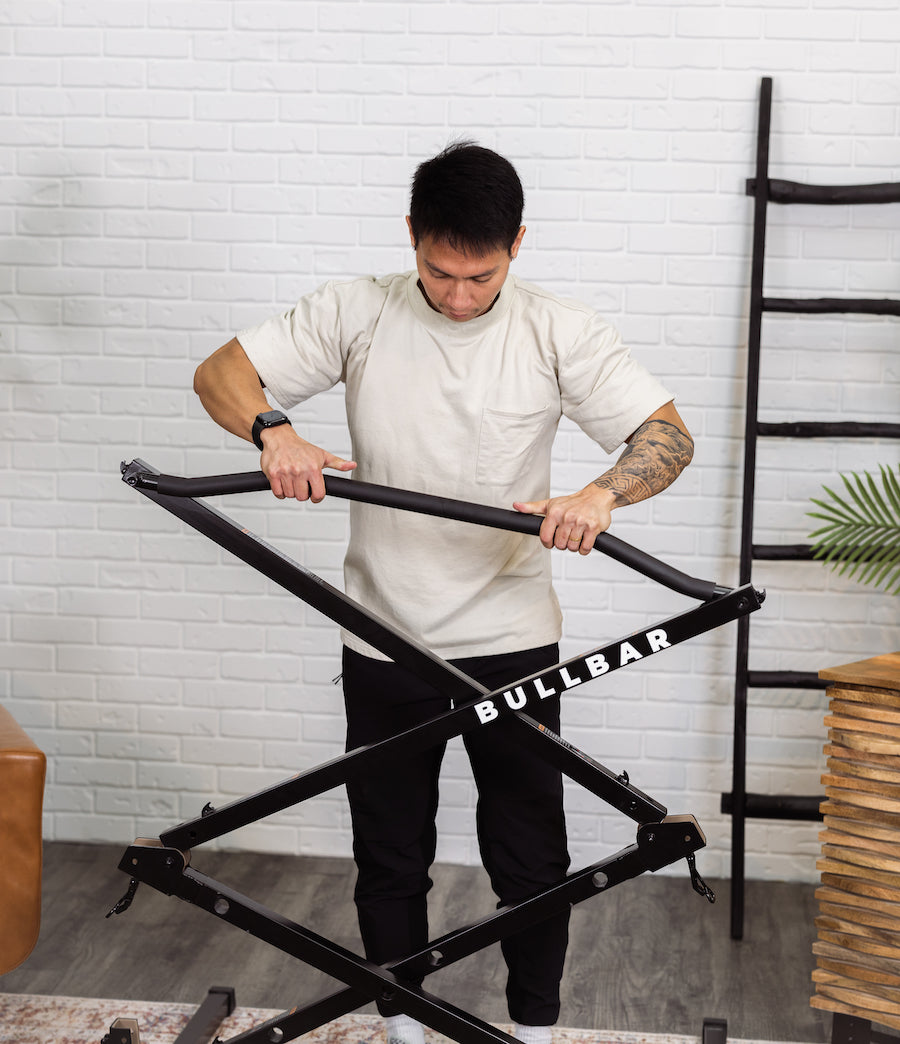
Most dip advice starts with the wrong question. You ask how wide to set your hands to hit the chest or triceps, then force your shoulders into whatever width the equipment allows. The better first question is what width lets your arms move through a full dip without fighting the bar. BULLBAR 2.0 answers that question with dip bars that adjust from 21 to 24 inches. That three-inch range changes shoulder position, elbow path, and the depth you can control. It does not magically switch muscle groups.
Where Fixed Width Came From
The fixed dip station is a descendant of gymnastic parallel bars. Those bars were built as a standard apparatus, not as a custom fit for each athlete. When dips moved into strength training, many manufacturers kept that standard width. The result is a movement that fits equipment better than it fits lifters.
Fixed parallel bars and many power tower dip stations use one width, often near 24 inches. That number works for some shoulder structures. For others, the hands sit outside the shoulders at the top, and the shoulders have to reach outward on every rep. For others, the bars sit too narrow, and the elbows jam into the ribs. Fixed width is an engineering compromise. Adjustable width moves the compromise to the lifter. BULLBAR 2.0 takes that approach.
What Moves When You Change the Width
When you move the dip bars from 21 to 24 inches, three things change.
- The angle between your upper arm and your torso changes. A wider hand position asks for more horizontal abduction at the shoulder, the same motion that gets uncomfortable in a wide bench press.
- The path of your elbow changes. On a narrow grip, the elbow tracks closer to the body and extension work dominates. On a wider grip, the elbow has more room to drift outward, which shifts tension toward the chest while also adding shoulder demand.
- The depth you can reach changes, because a width that matches your skeleton lets you lower under control instead of bouncing out of a compromised position.
Those changes are not small under load. Three inches between hand positions is enough to alter the line of force through the shoulder and the range of motion you can reach before your chest touches the bar.
Why Shoulder Width Comes First
The distance between your acromion processes, the bony points at the top of each shoulder, sets your natural hand position for pressing. If your acromion distance is 20 inches and the bars are fixed at 24, your hands sit two inches outside each shoulder. That extra reach forces internal rotation and anterior stress at the bottom. If your distance is 24 inches and the bars sit at 21, your elbows collapse toward your ribs and your torso gets pushed upright. A 20-inch shoulder width on 24-inch fixed bars forces your hands outside your shoulders at the top. A 24-inch shoulder width on 21-inch bars pins your elbows against your ribs. Both positions add stress and reduce control.
Neither version is a better chest dip. Both are a worse shoulder fit. Adjust the width first. Then use torso angle and rep execution to bias the muscles.
A fixed width also assumes that both shoulders move the same way. Many lifters have one shoulder that sits slightly higher or rotates differently. An adjustable bar lets you set the same width across the frame and then work on side-to-side control through the rep. That is a training variable, not a correction for a diagnosed problem.
Muscle Emphasis Is Not a Width Knob
The common gym rule says wider equals chest and narrower equals triceps. Direct research on dip grip width is scarce. The rule comes from bench press studies and bodybuilding tradition, where hand position changes range of motion and shoulder torque. Dips respond more to torso angle.
A forward lean with a slight elbow flare loads the chest even on a moderate width. An upright torso with elbows tight loads the triceps even on a wider setting. Width supports those positions, but it does not replace them. Move the bars to fit your shoulders, then lean into the muscle you want.
This is why the 21 to 24 inch adjustable range matters more than a much wider range would. You do not need to swing the bars from narrow to ultra-wide to change muscle emphasis. You need a small range that lets you find a shoulder position you can repeat, then use your body angle to steer the work toward the chest or triceps.
Finding Your Working Width
Start at shoulder width. Set the dip bars so your hands sit directly under your acromion processes when you support yourself at the top. From the front, your arms should look vertical. From the side, your wrists should stack over your elbows at the top.
Lower through a full rep and watch two things. If your shoulders roll forward or your elbows flare toward your ears, narrow the bars one setting. If your elbows pin against your ribs and your torso pops upright, widen the bars one setting. Train at that width for two to three weeks before changing again. The point is to lock in a setup that lets you add reps without changing the rules.
If a width causes sharp pain, reduce depth or stop. A width adjustment is a setup fix, not a treatment for an injury. See a qualified professional if pain persists.
Adjusting Width as a Training Variable
Once you have a working width, keep it. Most lifters change too many variables at once. They move the bars, change their lean, add load, and then wonder why the movement feels different. Treat width like a base.
Change bar height when needed. The BULLBAR 2.0 dip bars also offer three height settings. A shorter range of motion on a hard day can protect the shoulder while keeping the same hand placement. That single variable, height, is safer to adjust than width because it does not alter the angle at the shoulder joint. Use width changes only when your structure or your pain-free range changes.
For progressive overload, keep the width constant and add reps, add a controlled pause, or add external load within your capacity. A consistent width lets you train hard for months without irritation. Chasing a new stimulus every session usually adds noise instead of progress.
The BULLBAR 2.0 Setup
The BULLBAR 2.0 has dip bars that measure 33.5 mm in diameter and adjust from 21 to 24 inches. That diameter gives a full hand grip without excess thickness. The freestanding frame holds 400 lbs and folds to 45 by 13 by 11 inches when training ends. The open portal design removes the center post and back pad that force a fixed torso path on many power towers. You choose the width, the height, and the lean.
Good dip training does not start with a wider grip to chase a chest pump. It starts with a width that lets you train often, deepen your reps, and add load over months. Your shoulders decide the width. Your goals decide the rest.
Try BULLBAR 2.0 for 100 days, risk free. You get free 3-5 day U.S. shipping and a lifetime limited warranty.
Share
