



Tricep Dips vs Regular Dips: Stop Splitting the Movement
Fitness culture loves a clean split. Tricep dips target the triceps, regular dips target the chest. That split is tidy and mostly invented. On a dip station, the same hands grip the same bars while the same elbows flex and extend. The only meaningful variable is torso angle, and the upright version sold as a tricep builder often trades load and shoulder comfort for a burn that means less than you think.
A quick clarification before the anatomy. Bench dips are a different movement. Your hands sit behind you on a bench, your feet stay on the floor, and the load is limited by the bench height. On a dip station, tricep dips and regular dips describe the same exercise with a different torso angle. That distinction matters because the two names create a false choice.
How the Dip Actually Works
The dip is an upper body compound movement. You support your body on two parallel bars, flex your elbows to lower, then extend your elbows to press back to the top. The triceps brachii, a three-headed muscle, is the prime mover for elbow extension. The pectoralis major adducts and flexes the shoulder. The anterior deltoid assists. A group of scapular muscles keeps the shoulder blades controlled.
Every dip variation uses all of these muscles. Every joint angle keeps the pecs involved. Every elbow tuck keeps the triceps involved. The long head of the triceps originates on the infraglenoid tubercle of the scapula and crosses the shoulder joint, which means it contributes to shoulder extension as well as elbow extension and stays active throughout both the forward-leaning and upright dip patterns. That anatomical detail explains why torso angle changes triceps recruitment without turning the dip into a different exercise.
Torso Angle Shifts the Demand
When you lean forward on a dip, the shoulder moves into more flexion and adduction. The pecs get a longer stretch at the bottom, and the demand shifts toward the sternal fibers of the pec major plus the long head of the triceps. When you stay vertical, the elbow stays closer to the torso and the shoulder moves into extension behind the body. That position increases demand on the anterior deltoid and the triceps long head, but it also shortens the range for many lifters because the shoulder runs out of comfortable extension before the pecs reach a deep stretch.
Both angles load the triceps heavily because the elbow always extends under load. The choice is between more shoulder adduction or more shoulder extension. That is a joint position choice.
Why Upright Dips Feel Like a Tricep Move
The upright dip burns. That burn feels like proof of triceps focus, but it mostly reflects a shorter range, higher intramuscular tension at end range, and less mechanical work. A shorter range with a vertical torso reduces the distance the bar travels, so each rep does less work than a deeper regular dip. Burning is a poor proxy for growth. Growth responds better to mechanical tension and full range of motion under load. The regular dip, with a controlled forward lean and a deep descent, gives you more range and allows more weight on a belt over time.
Load matters. If the upright version forces you to cut depth and stay lighter, you are leaving triceps growth on the table. Some lifters can load the upright dip heavy and deep, but those lifters rarely call it a tricep dip. They call it a dip.
Shoulder Stress in Vertical Dips
Staying bolt upright during weighted dips places the humerus near end-range shoulder extension while bearing your full bodyweight plus added load. The anterior shoulder structures absorb more stress. Many lifters tolerate this for years. Others develop front shoulder irritation after a few weeks of upright dips and blame dips altogether. A controlled forward lean keeps the shoulder in a more stable mid-range, where the pecs and triceps share the load better.
If you have a history of shoulder trouble, talk to a qualified professional before loading dips. Treat the rest as a training observation: choose the torso angle that lets you use full range without pain, then load that pattern.
One Dip Pattern, Loaded Consistently
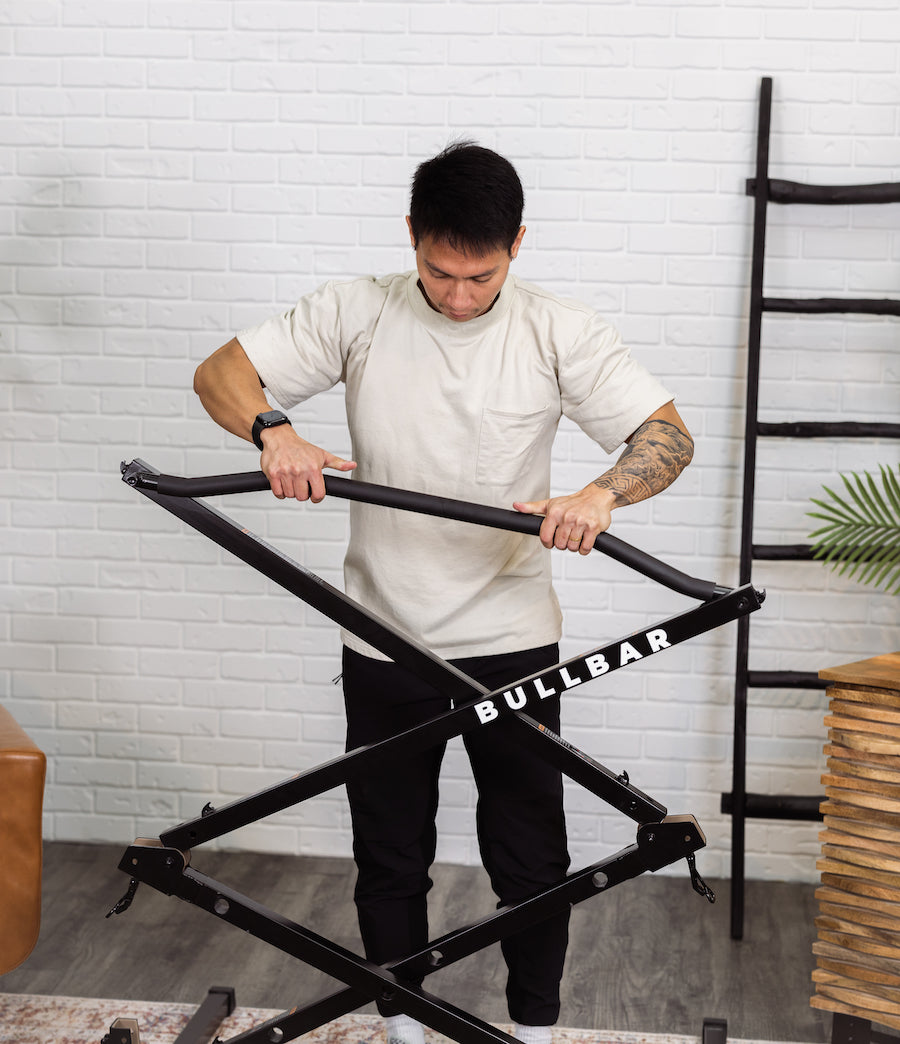
You do not need a separate tricep dip to grow your triceps. You need a stable dip station, a width that fits your frame, and a pattern you can load. On the BULLBAR 2.0, the dip bars are 33.5 mm in diameter, adjustable from 21 to 24 inches apart, with three height settings. The open portal design removes the center post and back pad found on bulky power towers, so your torso can move through a full range without the frame blocking you. The frame itself is 16-gauge industrial steel and tested at 400 lbs for more than 1,200 continuous rep cycles. The station will not be the bottleneck.
Set the bars so your wrists stack under your elbows, then follow this sequence:
- Brace and step up onto the bars.
- Lower with a slight forward lean, elbows tracking back at a comfortable angle.
- Go as deep as your shoulders allow without pain.
- Pause for a beat and press back to the top.
To bias the triceps, keep the elbows closer and reduce the forward lean slightly, but keep enough lean to protect the shoulder. If you want a true elbow extension isolation movement, do overhead extensions or close grip pressing. Then let dips be dips.
A Better Standard
Stop asking whether you should do tricep dips or regular dips. Ask two questions instead.
- Can you control the full range?
- Can you add load without losing position?
If the answer to both is yes, your triceps are getting trained. Use one dip pattern, progress it, and adjust torso angle only within a controlled range. That approach builds stronger, thicker triceps than chasing a separate upright variation that cuts your range and limits your load.
Train the dip you can load and control. BULLBAR gives you a freestanding, foldable dip station that sets up in under a minute and folds down to 45 by 13 by 11 inches when you are done. You weren't built in a day, and your triceps won't be either. One dip pattern, loaded consistently, gets you there.
Try the BULLBAR 2.0 for 100 days, risk-free. Free 3 to 5 day U.S. shipping and a lifetime limited warranty.
Share
